You've heard the term. Maybe you've tried it. You spent a Sunday away from your phone, ate plain food, sat in silence, and called it a dopamine detox.
Then Monday happened.
By noon you were back to full scroll velocity, wondering what the point was. Here's the honest answer: you didn't do a dopamine detox. You did a 24-hour vacation and expected a neurological reset. That's not how dopamine works — and understanding the difference is everything.
What Everyone Gets Wrong About Dopamine Detox
The term was coined by psychiatrist Dr. Cameron Sepah in 2019. His original idea was specific: take breaks from compulsive behaviors driven by variable reward — social media, video games, junk food — to reduce impulsive responding and increase deliberate behavior.
That's the whole thing. That's it.
What the internet turned it into is a performance sport. Sit in a blank room. Eat rice. Stare at a wall. Post about it on TikTok — which, to be clear, completely defeats the purpose.
The deeper misunderstanding is neurological. Most people treat the dopamine detox like a juice cleanse: suffer for a day, flush out the bad stuff, emerge renewed. The problem is that dopamine isn't a toxin. Peer-reviewed research on reward systems and behavioral addiction doesn't support the idea that you can flush dopamine from your brain, because there's nothing to flush. What you can do is recalibrate your brain's reward sensitivity. That's a slower, more specific process — and it's the one that actually works.
If you think you're flushing, you'll do 24 hours and give up. If you understand you're recalibrating, you'll understand why 72 hours is the minimum and why the replacement behavior matters as much as the removal.
What Dopamine Actually Does
Dopamine is not the pleasure chemical. That's the single biggest misunderstanding driving the dopamine detox trend, and it's wrong.
Dopamine is the anticipation chemical. It fires when you expect a reward, not when you get one. The scroll isn't satisfying because you found something great. It's addictive because your brain is constantly anticipating that you're *about* to. The occasional good post buried in mediocre ones is what keeps you going — and it's designed exactly that way.

Your dopamine system was not built for 200 notifications a day.
This is the variable reward mechanism. Slot machines run on it. Social media engineers optimize for it. Not every pull gives a win, because if every pull won, dopamine would normalize and stop firing. The randomness is the product.
The American Psychological Association links variable reward structures in social media to measurable increases in anxiety and compulsive use — independent of the content itself. The format is the problem. Not what you find. How the system delivers it.
Here's why that matters for the detox: your brain isn't addicted to content. It's addicted to the *structure* of the experience. Removing the app temporarily doesn't fix the neurological adaptation that's happened. The adaptation is the target.
Why Your Brain Feels Broken
After years of high-frequency stimulation — notifications, likes, scroll rewards, video autoplays — your baseline has shifted.
Think of it like volume. You've been listening to music at full blast for three years. Now silence feels uncomfortable. A book feels slow. A conversation feels thin. This isn't because silence is actually uncomfortable or books are actually slow. Your sensitivity to stimulation has recalibrated for maximum volume.
The research is clear: a study in *Neuropsychopharmacology* found that repeated high-stimulation behavior reduces baseline dopamine receptor sensitivity — meaning you need more stimulation to feel the same reward. The same mechanism underlies every behavioral addiction.
The good news: reversible. The bad news: it takes longer than 24 hours, and it requires the right protocol.
What a Real Detox Looks Like
A real dopamine reset has three components. Miss any one and you're doing a performance, not a protocol.
1. Remove the specific high-stimulation inputs — not everything

One tap. Apps locked. No bypass on your phone.
You don't need to become a monk. You need to identify the specific behaviors driving the overstimulation. For most people: social media, short-form video (TikTok, Reels, YouTube Shorts), and compulsive notification checking.
Note what's not on that list: long-form film, cooking, exercise, conversation, work tasks. The distinguishing factor is variable reward at high frequency. A film has a beginning, middle, and end. It doesn't ping you 200 times with the possibility of something great. The variable reward structure — not screens in general — is what you're removing.
2. Replace with low-stimulation activities — specifically
The detox fails when the removal creates a vacuum and the vacuum gets filled with the next most stimulating thing available. Pull Instagram, replace it with Reddit. Pull TikTok, replace it with YouTube. The stimulation barely drops and the baseline doesn't move.
Effective replacements are boring by design: walking without headphones, reading physical books, cooking from a recipe, sitting outside. The boringness is the mechanism. You're reacquainting your brain with low-stimulation reward.
This is where Shift fits practically — not as a motivational tool but as an environmental one. When the apps are locked by a physical NFC device rather than a software setting, the vacuum doesn't immediately fill. The physical friction gives the urge enough time to pass. That pause is the entire mechanism.
3. Duration: 72 hours minimum, 7 days for meaningful results
The neurological research doesn't support the 24-hour detox as a meaningful reset. Receptor sensitivity doesn't shift that fast. What it does support:
- 72 hours: initial reduction in compulsive urge intensity
- 7 days: measurable improvement in focus duration and resting satisfaction
- 30 days: significant baseline resensitization
This doesn't mean 30 days completely offline. It means the protocol needs to be sustained enough for actual neurological change — not willpower performance.
The 72-Hour Reset Protocol
Here's what the first three days look like.
Hour 0 — Define your targets precisely
Write down the three specific behaviors you're removing. Not "social media" — that's vague enough to negotiate with at 11pm. "Instagram, TikTok, Reddit." Three apps. Three behaviors. Specific.
Use the Shift Puck or a Screen Time PIN set by someone else to lock those apps. The lock needs friction you can't immediately bypass. A software lock you set yourself is not a lock — it's a suggestion.
Hours 1–24 — The discomfort window
You will feel bored. You will feel restless. You will reach for your phone automatically 40 times before remembering it's locked.
This is not a problem. This is the mechanism working. Your brain is registering the absence of variable reward. The urge passes in 3–10 minutes every time if you don't act on it. Replace the reach with something physical: two pages of a book, a glass of water, 10 push-ups. Not meaningful. Just enough to interrupt the loop.
Hours 24–48 — The flatline
Day two is typically the worst. Motivation drops. Everything feels grey and flat. This is dopamine baseline recalibrating — the high-stimulation floor dropping before the new normal settles.
Keep going. This is the inflection point every 24-hour detox misses because people stop at hour 24, feel nothing, and conclude it doesn't work.
Hours 48–72 — The shift
Around hour 48–60, most people report a real change: focus returns more easily, boredom becomes tolerable, and low-stimulation activities start to feel genuinely rewarding again. A walk. A meal. A conversation that doesn't compete with a notification.
This is the target. Not an epiphany — a recalibration. The volume coming down so that normal sounds normal again.
Sustaining beyond 72 hours
After the initial reset, the sustainable protocol matters more than duration. Keep apps locked during high-risk windows — mornings and evenings, which are where most compulsive use happens. Build one low-stimulation activity into your daily routine automatically. Use Shift as an ongoing environmental control, not a one-time intervention.
The detox isn't the destination. The recalibrated baseline is. The environment maintains it.
What Happens After
Let's be honest about what changes and what doesn't.
What changes:
- Boredom becomes manageable instead of intolerable
- Focus sessions get longer before distraction hits
- Low-stimulation activities — reading, cooking, walking, conversation — feel genuinely rewarding
- The phone-reach habit weakens. Not disappears. Weakens.
What doesn't change:
- The apps still work exactly the same way. Instagram is engineered to the same specifications as before. You're more sensitive to its pull now, not less — which means you also feel the reward more when you do engage intentionally.
- The structural problem hasn't changed. Your environment is the only thing that protects you.
- One bad week accelerates reversion. The reset is fragile until new habits are deeply embedded.
One person I know — after losing two evenings a week to his phone for three years — did the 72-hour protocol properly, built a reading habit in the gap, and used a physical locker for his three problem apps in the evenings. Six months later, his average screen time was down from 5h 40m to 1h 20m per day. Not because he had better willpower. Because he'd rebuilt the environment so willpower wasn't required.
The Tool We Built for This
I'm one of the founders of Nobrainrot®. We built Shift specifically because we hit the post-detox wall ourselves.
The detox works. The problem is what comes after. You recalibrate your baseline and then walk straight back into the same environment that degraded it. The apps are still installed. The notifications are still configured. Nothing changed except you — and you're the weakest part of the system.
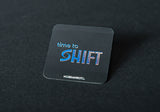
Shift is a physical NFC device. Tap your phone to it to lock the apps you've chosen. Tap the device to unlock. The off-switch doesn't live on your phone, so it can't be bypassed by a software prompt at 10pm when your resistance is zero.
It's not motivation. It's architecture.
Shift — 199 zł, 30-day money-back guarantee →
Frequently Asked Questions
The term is imprecise but the mechanism is real. You can't literally detox dopamine — it's not a toxin. What you can do is reduce high-frequency variable reward behaviors long enough for receptor sensitivity to recalibrate. The peer-reviewed research on behavioral addiction consistently shows that sustained reduction in compulsive stimulation produces measurable changes in baseline reward sensitivity. Whether the detox works depends entirely on whether you do it correctly: minimum 72 hours, targeted removal of specific behaviors, deliberate low-stimulation replacements.
Minimum 72 hours for initial effects. Meaningful resensitization around 7 days. Significant baseline change at 30 days of sustained reduction. The 24-hour detox popular on social media doesn't produce neurological change — it's too short. If you've tried a day-long detox and noticed nothing, you didn't do it long enough. Push to 72 hours and you'll feel the difference.
Yes, with specificity. The target behaviors are high-frequency variable reward inputs: social media, short-form video, compulsive notification checking. Work email, calls, and necessary apps don't run on the same variable reward structure. Use a physical blocker like Shift to lock specific problem apps while keeping work tools accessible. Blanket phone removal is harder to sustain and not actually more effective.
Expected. Day two typically brings the lowest mood and motivation — sometimes called the dopamine flatline. Your brain is registering the absence of stimulation it calibrated for. This is the mechanism working correctly. The flatline resolves by hours 48–72 for most people. If you stopped at day two and concluded the detox doesn't work, that's the most common mistake. Push past it.
Low-stimulation activities only: walking without headphones, reading physical books, cooking from a recipe, sitting outside without a screen. The replacement needs to be genuinely boring. High-stimulation replacements like gaming, binge-watching, or podcasts at 2x speed don't produce the same recalibration — they're just different inputs running on similar reward structures.
The recalibrated baseline is fragile for the first few weeks. Keep problem apps locked during high-risk hours, build one automatic low-stimulation habit into your daily routine, and use environmental controls rather than willpower for ongoing management. For more on the sustainable protocol, read our guide on how to actually reduce screen time.
Not exactly. A digital detox typically means going offline entirely. A dopamine detox is more targeted: it removes specific high-stimulation, variable-reward behaviors — not all digital activity. The dopamine detox is more sustainable because you're not abandoning your devices entirely, and it's more effective because it targets the actual mechanism — variable reward frequency — rather than screens in general.

The reset is 72 hours. The environment is the rest of your life.